Zones of Regulation
The Zones of Regulation is a programme that aims to help children notice the emotion they are feeling and then regulate themselves if they are feeling uncomfortable.
To Start
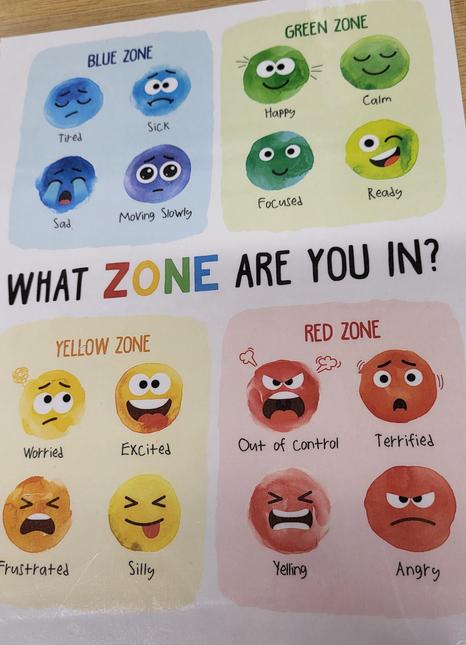
The programme starts by helping children to identify which zone an emotion or feeling is in.
Blue Zone
This is where you would be if you are feeling:
- tired
- sad

- bored
- sick
In general you are feeling slow and are mostly feeling uncomfortable. Your energy levels will be low and you may be seen yawning, quiet, slumped over a table or mumbling our words. You will need to privide yourself with energy, comfort or rest.
Green Zone
This is where you feel:
- happy
- pleased
- proud

- content
- calm
- ready to learn
In this zone you will feel healthy and alert with the ability to adjust our energy levels according to the situation. if you are about to run a race you will be able to doso by increasing your energy levels. In zone you will be alert and focussed.
Yellow zone
This is when there is...
- some loss of control
- you may feel worried
- scared

- frustrated
- behave in a silly way
- be overly excited
In this zone you feel either comfortable or uncomfortable. Your energy levels are now increasing and you will experience stronger feelings. The aim of support is to help you restore you enegy levels so that you feel a sense of calm again.
Red Zone
This is where there
- is a loss of control
- can also be either comfortable of uncomfortable.
- You could be feeling rage
- fury
- elation
- total fear
In this zone you experience very high energy levels and the strongest feelings. Support chosen needs to ensure that you stay safe and feel calmer. Sometimes you will need a pause and this can be achieved by giving yourself space and taking deep breaths.
The children explore these zones and learn to be able to identify which zone they are in. This is supported by all staff who wear zone cards attached to their lanyards. There are also posters in every room, and a copy can be found at the bottom of this page. Sometimes children can’t or don’t want to name the emotion but they can identify which zone they are in.
Children also learn that their feelings and emotions can lead to expected and unexpected behaviours and that those behaviours can have an impact on the children and adults around them. If you are in the red zone and yelling at your friend it is unlikely that your friend will be in the green zone.
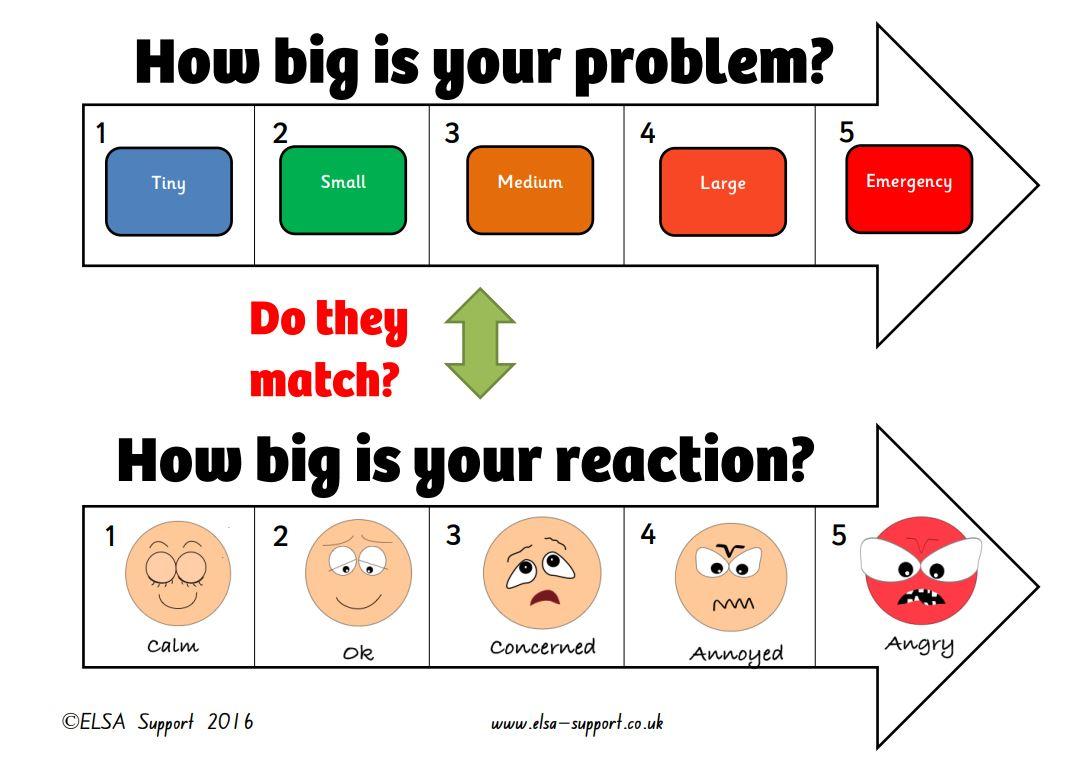
We also may scale the problem with the children. A copy of the scale is also at the bottom of this page for your reference. Does the size of the reaction match the problem? Is this really a yellow zones problem or is it more like a green zone problem?
Next
Once children understand the concept of the zones they will they explore ways to help regulate themselves with the support of sensory devices and calming techniques.
Support can be identified for each zone. The aim is to feel more in control and manage the emotion or maintain that control (green zone.)
At Home
You can support you child/children at home by asking them which zone they are in and using I wonder
“I wonder if you are in the yellow zone at the moment, you seem a bit worried.’ Naming the emotion will help them with their emotional literacy and show them that you can see they are feeling uncomfortable.
Exploring sensory ideas to help your child feel calmer will also really help. Some children find colouring, play dough, using stress balls, time at the park or reading really beneficial.
You could also try using relaxing music, children’s yoga for deep breathing exercises or mindfulness.
Finally
The key message is to help your child understand that it is ok to feel angry, be worried or scared but they do need to find ways to help themselves manage those uncomfortable feelings and self-sooth. This will also help them with their self-esteem and resilience.
I hope you find this information useful, please do contact me at school if you would like any more information about the zones and ways to use them.
ELSA